
A sound bath is a guided relaxation session in which you lie down, close your eyes, and are "bathed" in sustained sound and vibration from instruments such as crystal singing bowls, gongs, and chimes. No water is involved: the "bath" is immersion in sound. A typical session lasts 45–60 minutes, requires no experience, and asks nothing of you except to lie still and listen. It is also called sound healing, sound meditation, or singing bowl meditation.
We include a sound bath in every retreat we run at Vipassana.ca in Alberta, and it is consistently the session people talk about at breakfast the next morning. Some fall asleep. Some feel waves of emotion they didn't expect. Most simply say their mind went quieter than it has in months. This guide explains what actually happens during a sound bath, what the research says, who should be cautious, and how to know whether it is right for you.
What Is a Sound Bath?
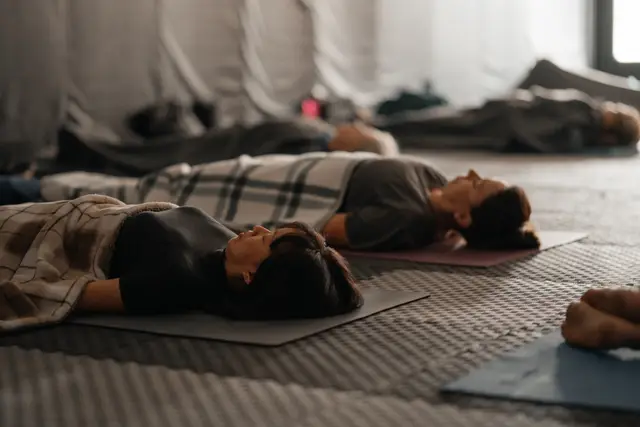
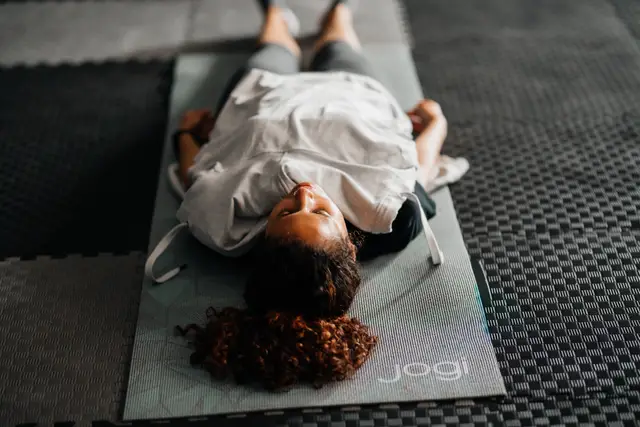
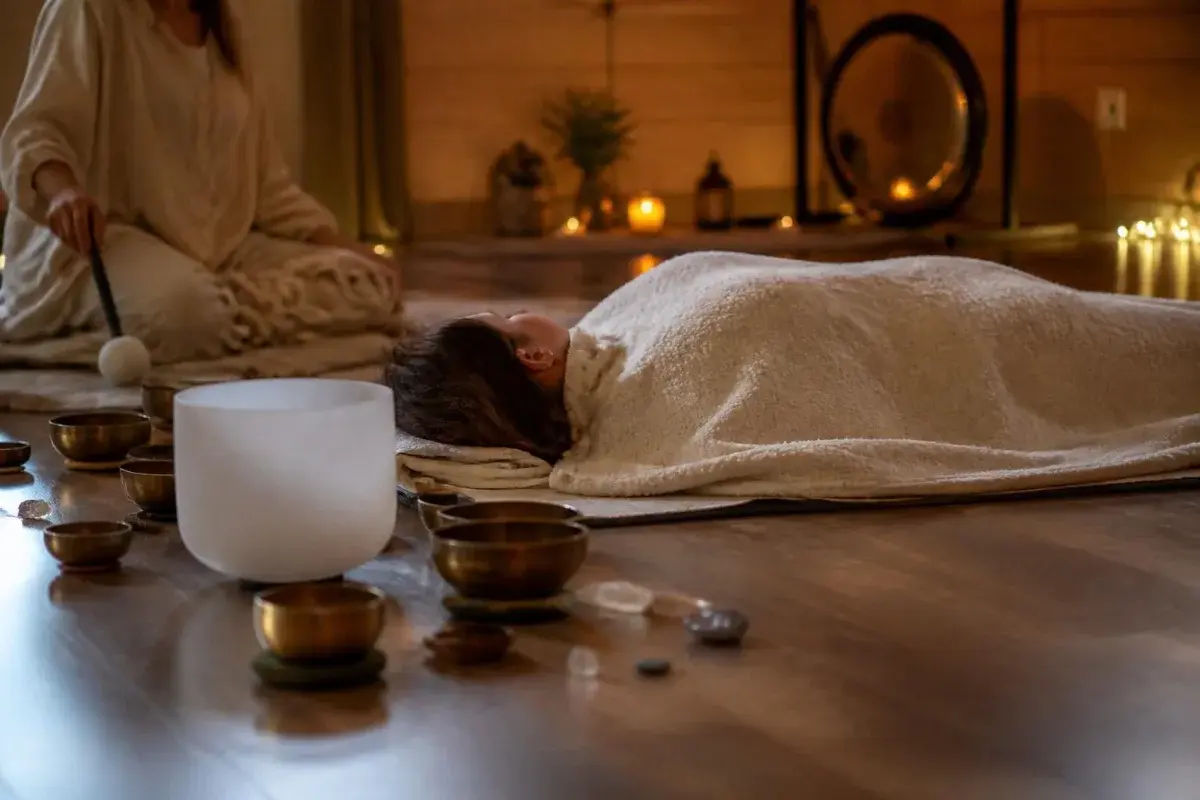
A sound bath is a form of receptive meditation. In seated meditation you actively work with attention; in a sound bath you receive. You lie on a mat, close your eyes, and a facilitator plays a sequence of instruments around the room, sometimes around your body. The overlapping tones and physical vibrations become the object of attention, and the mind tends to follow them into stillness on its own.
Sound bath instruments
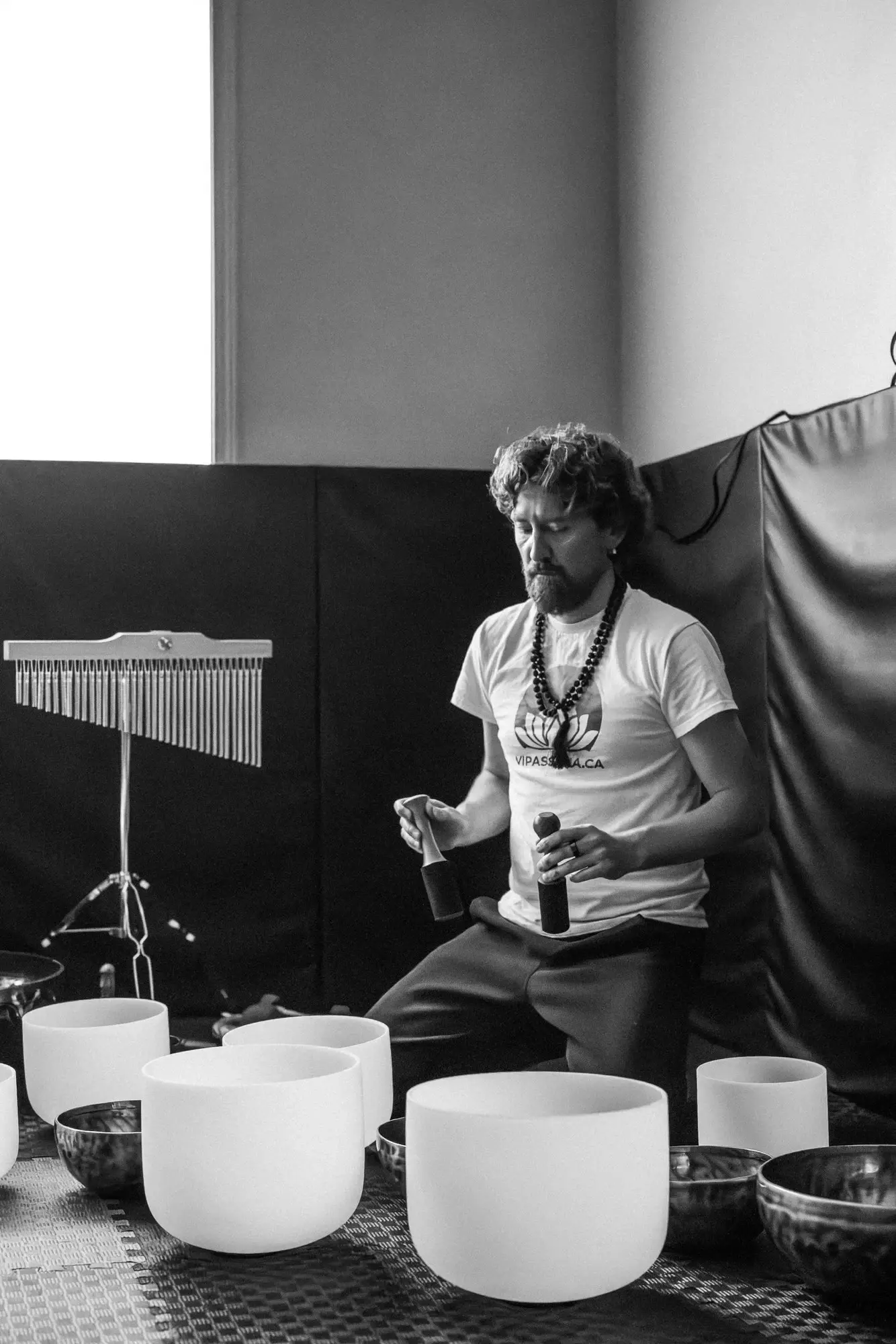
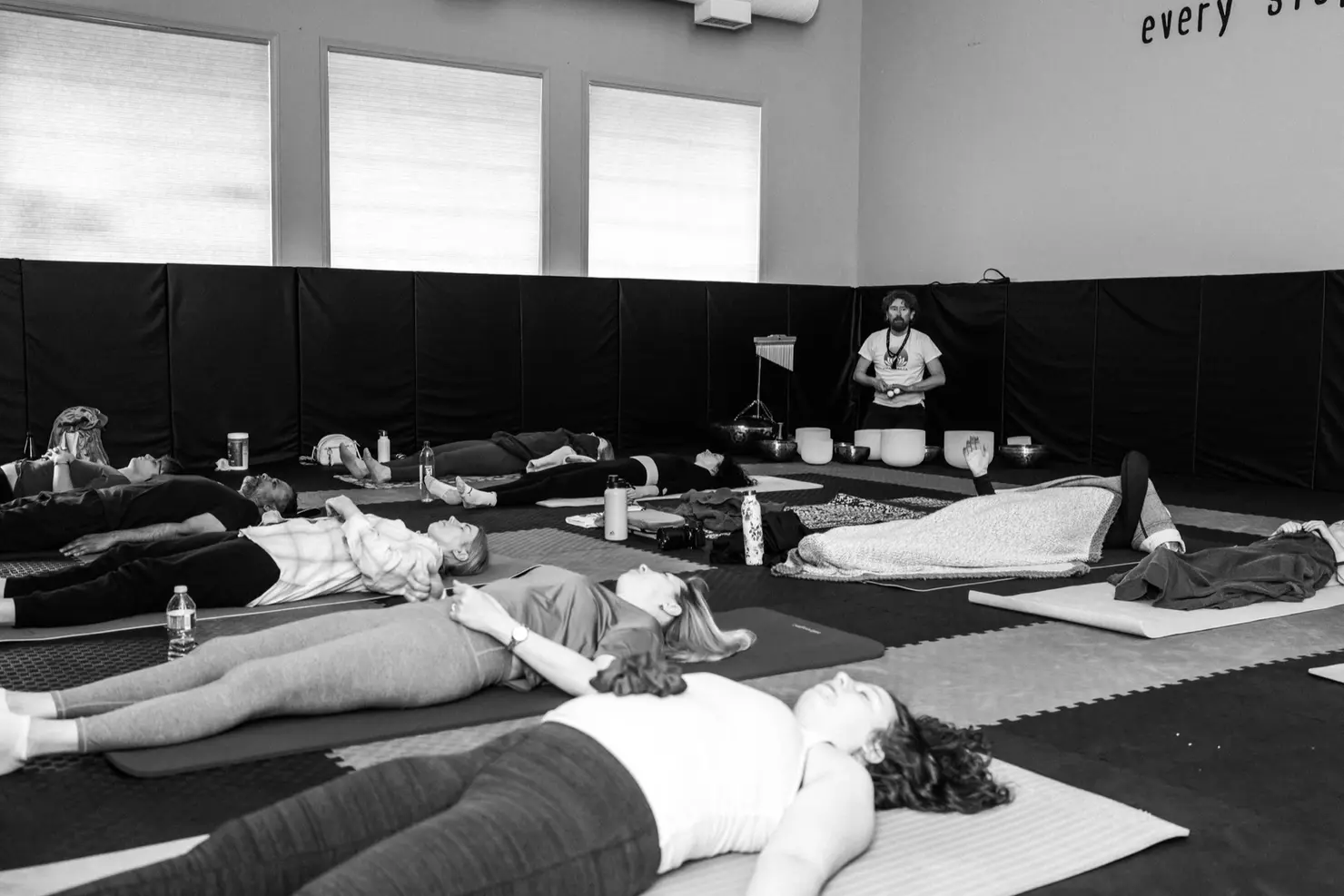
Common instruments in a sound bath session include:
- Crystal singing bowls — pure, sustained tones that seem to fill the whole room
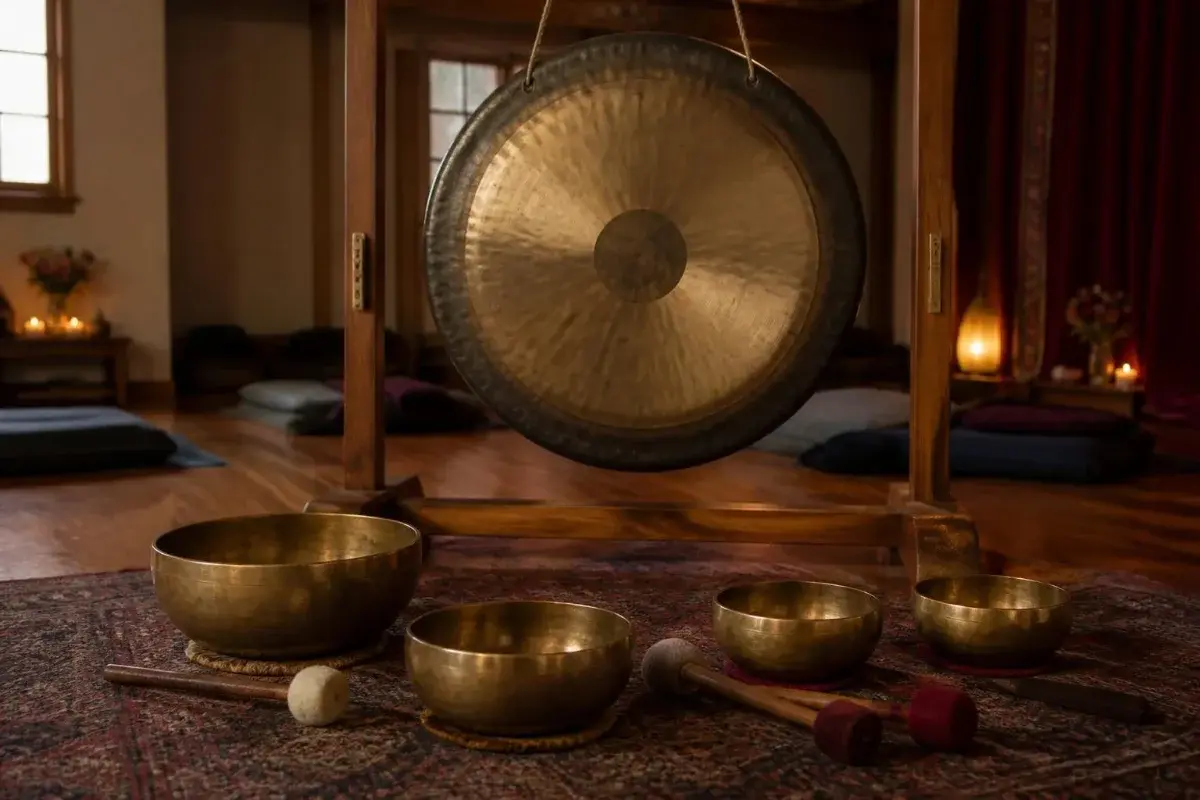
- Tibetan (metal) singing bowls — warmer, more textured overtones
- Gongs — deep, complex washes of sound that build and dissolve
- Chimes and koshi bells — bright accents, often used to open and close a session
- Ocean drums and rain sticks — natural, textural sounds
Sound bath vs. sound healing vs. sound therapy
The terms overlap, and it helps to know how they are used. A sound bath is the session format: a group lies down and listens for 45–60 minutes. Sound healing is the broader umbrella term for using sound and vibration for relaxation and wellbeing, which includes sound baths, one-on-one bowl work, and chanting. Sound therapy or music therapy in the clinical sense is delivered by a credentialed therapist under a treatment plan. A sound bath is not a clinical treatment and does not need to be: it sits closer to guided meditation than to a medical intervention.
What a sound bath is not
Two misconceptions are worth clearing up. First, there is no water. You stay dry, fully clothed, usually wrapped in a blanket. Second, a sound bath is not a concert or a performance. I trained in music long before I trained in meditation, and the difference is simple: in a concert you follow the music; in a sound bath there is no melody to follow and nothing to appreciate or analyse. It is an environment designed to let your nervous system downshift.
What Happens During a Sound Bath: A Minute-by-Minute Guide
Here is how a 60-minute sound bath unfolds at our retreats in Alberta:
| Stage | Time | What happens |
|---|---|---|
| Arrival | 5–10 min | Lie down, set an intention (or none) |
| Settling in | 5 min | A few guided breaths, short body scan, soft chimes |
| Sound journey | 30–40 min | Bowls, then gong, then layers of both |
| Return | 5–10 min | Sound fades, silence, then you sit up slowly |
Arrival (5–10 minutes). You set up a mat, cushion, and blanket and lie down on your back. The facilitator explains what to expect and invites you to set a simple intention, or none at all.
Settling in (5 minutes). The session usually opens with a few guided breaths or a short body scan, sometimes with soft chimes. This transition matters: it signals to the body that nothing is required for the next hour.
The sound journey (30–40 minutes). The facilitator moves through instruments in waves, often starting with grounding lower tones and building layers of bowls and gong. You may notice the vibrations physically, especially from larger bowls placed near the body. Thoughts drift in and out. Many people enter a state between waking and sleeping, similar to the moments just before falling asleep.
Return (5–10 minutes). The sounds gradually thin out and fade. Silence is held for a few minutes, and for many participants this silence is the most profound part. You are then gently invited to move, stretch, and sit up.
There is no right way to experience it. Falling asleep is fine. A wandering mind is fine. The sound does the work.
What to wear and bring
Wear loose, warm, comfortable clothes: body temperature drops when you lie still for an hour. Bring a yoga mat if the venue doesn't provide one, a blanket, and something for under your knees or head. Leave your phone off and outside the room. Eat lightly beforehand and skip caffeine if you can.
How a Sound Bath Affects the Body and Brain
The mechanism is less mystical than it might seem. Sustained, predictable, non-threatening sound gives the brain a single soft focus, which quiets the stream of self-referential thought. At the same time, lying still and breathing slowly activates the parasympathetic nervous system, the "rest and digest" state, which lowers heart rate, breathing rate, and muscle tension. Low-frequency vibration from large bowls and gongs is also felt directly in the body, which pulls attention out of the head and into physical sensation.
The research base is young but promising. Goldsby, Goldsby, McWalters and Mills (2017) published an observational study in the Journal of Evidence-Based Complementary & Alternative Medicine in which 62 participants completed a mood and tension questionnaire before and after a Tibetan singing bowl meditation. Tension, anger, fatigue, and depressed mood all fell significantly after a single session, and people who had never done a singing bowl meditation before showed some of the largest reductions in tension. Wider research on relaxation-based music interventions consistently shows reductions in self-reported stress and anxiety.
It is honest to say the field still needs larger randomised controlled trials. But the direction of the evidence, and the consistency of what we see in the room, point the same way: deep rest, reliably induced.
Sound Bath Benefits
Based on the research above and what participants consistently report, the benefits of a sound bath include:
- Reduced stress and tension. The most immediate and most-cited effect, often noticeable within a single session.
- Improved mood. The Goldsby study recorded significant drops in anger and depressed mood after one session.
- Better sleep that night. Deep parasympathetic activation in the evening carries into sleep. At our retreats, the sound bath is deliberately scheduled last, before rest.
- An easier way into meditation. For beginners who find silent sitting frustrating, sound gives the mind something to rest on. Many participants tell us the sound bath was their first experience of what a quiet mind actually feels like, and that this is what made seated Vipassana practice click.
- Emotional release. Not universal, but common: tears, memories, or waves of feeling surfacing in deep relaxation. This is normal and usually experienced as relieving.
Who Should Be Cautious: Sound Bath Side Effects and Contraindications
Sound baths are safe for most people. The most common "side effects" are mild and short-lived: light-headedness on sitting up, a headache if you were dehydrated, or feeling unusually emotional or tired for the rest of the day. Drink water, get up slowly, and keep the evening quiet.
A few groups should check with a healthcare provider first and let the facilitator know:
- Pregnancy (especially the first trimester). Many facilitators recommend waiting, or keeping bowls off and away from the body.
- Epilepsy or seizure conditions. Certain sound and vibration patterns can be a trigger for some individuals.
- Pacemakers or serious heart conditions. Strong vibrations near the chest are best avoided.
- Tinnitus, hyperacusis, or sound sensitivity. Position yourself farther from the instruments and tell the facilitator.
- Acute PTSD or unmanaged psychiatric conditions. Deep relaxation can occasionally surface difficult material; choose a trauma-aware facilitator.
None of this makes sound baths dangerous. It makes them like any body-based practice: worth approaching with basic self-knowledge.
Sound Bath vs. Meditation: Do You Have to "Do" Anything?
No, and that is the point. In most meditation styles you train attention: returning to the breath, noting thoughts, holding a technique. In a sound bath the environment does the holding. You simply receive.
This is why we pair the two at our retreats. Vipassana meditation builds the skill of awareness; the sound bath provides the experience of deep rest without effort. One trains the mind, the other releases the body. Participants often find that their next seated meditation after a sound bath is noticeably deeper: the nervous system is already settled, so attention has less turbulence to fight through. If you have never meditated at all, our step-by-step guide to starting meditation is the place to begin.
Where to Experience a Sound Bath in Calgary, Edmonton, and Alberta
You have a few options. Drop-in sound bath sessions run at yoga studios in Calgary and Edmonton, and one-off events appear regularly on community boards and Eventbrite. A studio session is a good first taste.
The deeper version is a sound bath inside a retreat, and every retreat we run includes one:
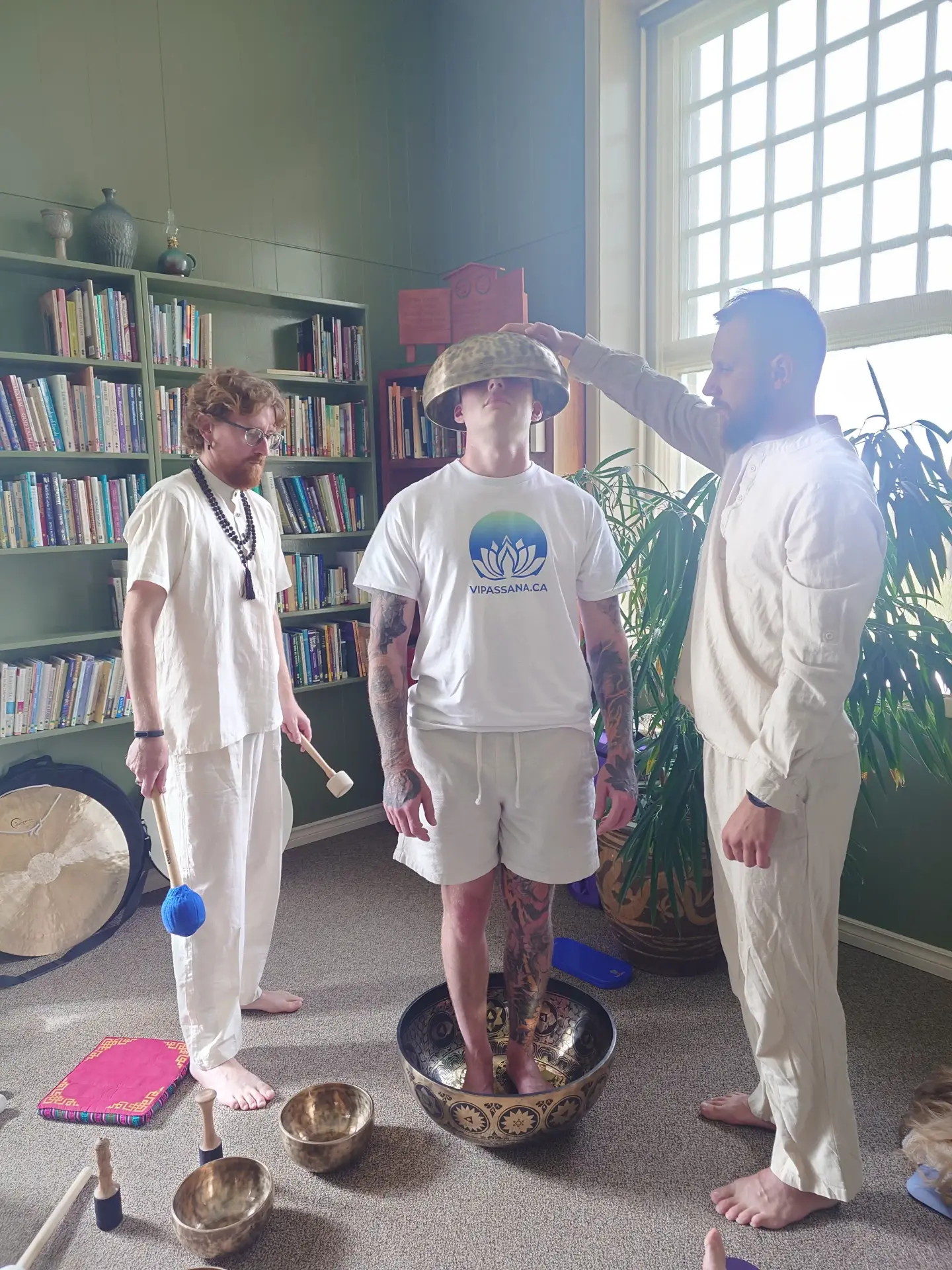
- One-day Vipassana retreat in Calgary and Edmonton. A single Saturday or Sunday, 9 AM–5 PM, combining hatha yoga, guided Vipassana meditation, a sound healing journey, and OM chanting. The sound bath closes the day.
- Three-day silent retreat at Mount St. Francis Retreat Centre in Cochrane, near Calgary. Here the sound bath comes after a full day of meditation and yoga, when the mind is already quiet. In that state the effect is categorically different from an after-work drop-in: there is nothing to come down from.
If you would rather meet us before committing to a retreat, our Free Yoga Day in Calgary and Edmonton is a free, open session where you can practise with the same teachers and ask about the retreats in person.
Frequently Asked Questions
What does a sound bath do?
A sound bath guides the nervous system into a deeply relaxed, meditative state using sustained instrumental sound and vibration. Research and participant reports point to reduced tension, lower stress, improved mood, and better sleep after a session.
Do sound baths really work?
For relaxation, stress reduction, and mood, yes, with growing research support. A 2017 observational study of 62 people found significant reductions in tension, anger, fatigue, and low mood after a single singing bowl session. Claims beyond that, such as curing disease or "frequency medicine", are not supported by evidence, and a good facilitator won't make them. Treat a sound bath as a powerful rest and meditation tool, not a medical treatment.
Who should not do sound baths?
People in the first trimester of pregnancy, people with epilepsy or seizure disorders, and people with pacemakers or serious heart conditions should consult a doctor first and inform the facilitator. Anyone with tinnitus, severe sound sensitivity, or an acute, unmanaged mental health condition should choose an experienced, trauma-aware facilitator and sit farther from the instruments.
Are there any negative effects of a sound bath?
Serious negative effects are rare. Some people feel briefly light-headed, emotional, or tired afterwards, and loud instruments played too close can be uncomfortable for people with tinnitus or sound sensitivity. Drinking water, getting up slowly, and telling the facilitator about any condition covers almost every case.
How long does a sound bath last?
Most sound baths last 45–60 minutes, including a short settling-in period at the start and a few minutes of silence at the end. Sessions inside a retreat may run up to 90 minutes.
Can I do a sound bath at home?
Yes, in a limited way. Recorded sound baths on YouTube or meditation apps give the same soft focus for attention and work well for sleep. What a recording can't give you is the physical vibration of a bowl or gong in the room, which is a large part of the effect. If you have a singing bowl at home, a few minutes of striking it and listening to the tone fade is a simple, effective mini-practice.
How often should you do a sound bath?
There is no required frequency. Many people attend monthly as a nervous-system reset; others use them before or during periods of high stress. Because regular practice has no known negative effects, frequency is a matter of preference and access.
What is the difference between a sound bath and sound healing?
A sound bath is a specific session format: a group lies down and listens to live instruments for about an hour. Sound healing is the broader term for any use of sound and vibration for relaxation and wellbeing, including sound baths, one-on-one bowl work, and mantra chanting.

Artem Rusinov
Founder & lead instructor · Vipassana.ca
Artem is a certified yoga instructor and a member of the International Yoga Federation and Yoga Alliance. He trained in music before coming to meditation, and leads the yoga, meditation and sound healing sessions at Vipassana.ca’s one-day and three-day retreats in Calgary and Edmonton.
- Goldsby TL, Goldsby ME, McWalters M, Mills PJ. Effects of Singing Bowl Sound Meditation on Mood, Tension, and Well-being: An Observational Study. Journal of Evidence-Based Complementary & Alternative Medicine. 2017;22(3):401–406. doi:10.1177/2156587216668109