
To meditate is to sit still, put your attention on one thing (usually the breath), notice when it has wandered off, and bring it back. That last part is not a failure of the practice; it is the practice. Everything else in this guide, from where to sit to how long to sit, exists to make that one movement of attention easier to repeat.
I came to meditation late and sideways. Yoga entered my life through back pain about eight years ago, and meditation arrived a few years after that, once I had tried enough other things to be sceptical of all of them. I now coordinate retreats at Vipassana.ca and lead the one-day retreat in Calgary, but I still remember exactly how confusing the first weeks were: not knowing whether I was "doing it right", falling asleep, quitting after ten days, starting again. This is the guide I wish someone had handed me then. It is written for a beginner meditating at home, with no app and no teacher in the room, and it goes in the order you will actually need it.
What Meditation Is (and What It Is Not)
Meditation is the deliberate training of attention. In most traditions, and in most of the research, it takes one of two forms. In focused attention you keep the mind on a single object, such as the breath, a sound, or a phrase, and return whenever it drifts. In open monitoring, which is what mindfulness meditation and Vipassana train, you widen the lens and observe whatever arises (a sensation, a sound, a thought) without following it or pushing it away. Beginners almost always start with the first, because the breath gives the wandering mind somewhere concrete to come home to. A third family, loving-kindness (metta), works with the heart rather than the attention: you silently wish well to yourself and others. It is a good complement, and a poor place to start on your own.
What meditation is not is emptying the mind. If you sit down expecting silence, you will get noise, conclude you are bad at it, and stop. A 2010 study in Science that sampled the thoughts of more than 2,000 people through their phones found that the mind wanders about 47% of the time, whatever we are doing. That is the material you will be working with. The skill is not to have fewer thoughts; it is to notice them sooner.
The research on what regular practice does is more sober than the headlines and still encouraging. A 2014 meta-analysis in JAMA Internal Medicine of 47 trials found moderate evidence that mindfulness meditation programmes improve anxiety, depression, and pain. Reviews of the neuroscience point to measurable changes in attention networks and in the brain's response to stress after eight weeks of daily practice. None of this requires belief. It requires sitting.
Before You Sit: Three Small Decisions
Beginners spend a lot of energy on preparation that does not matter (incense, playlists, the perfect cushion) and none on the three things that do.
Where. One spot, used every time. It can be the corner of a bedroom or a chair by a window; the only requirements are that you will not be interrupted for ten minutes and that the spot is not your bed. The mind learns places. After a few weeks, sitting down in that spot will begin to settle you before you have done anything.
When. Pick a time and attach it to something you already do. Right after the morning coffee is the most common and the most reliable, because nothing has gone wrong yet. Evening works for people who need to unload the day, with the caveat that a tired body wants to sleep rather than sit. Do not decide fresh each day; decide once.
How long. Five minutes for the first week, ten for the next few, and no more than twenty for months. There is no prize for length, and a session you dread is one you will skip. If you have five minutes, you have enough.
How to Meditate Properly: Posture and Breath
"Properly" worries beginners more than it should. There is no secret posture. There is one principle: the spine upright, the body relaxed, the eyes closed or lowered. Upright keeps you awake; relaxed keeps you comfortable enough to stay.
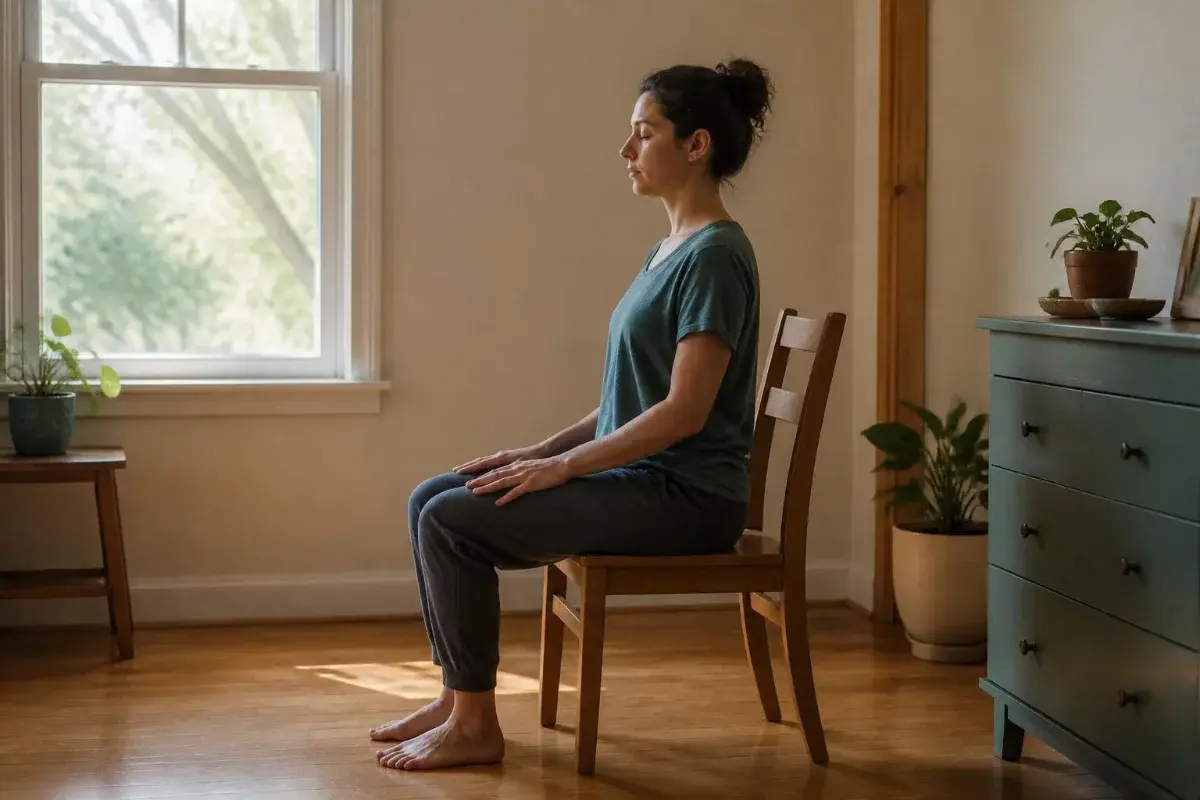
On a chair: sit toward the front edge so your back does not touch the backrest, feet flat, hands on the thighs. This is the right choice for most adults, and it is exactly what we recommend to first-time participants at our retreats who cannot sit on the floor.
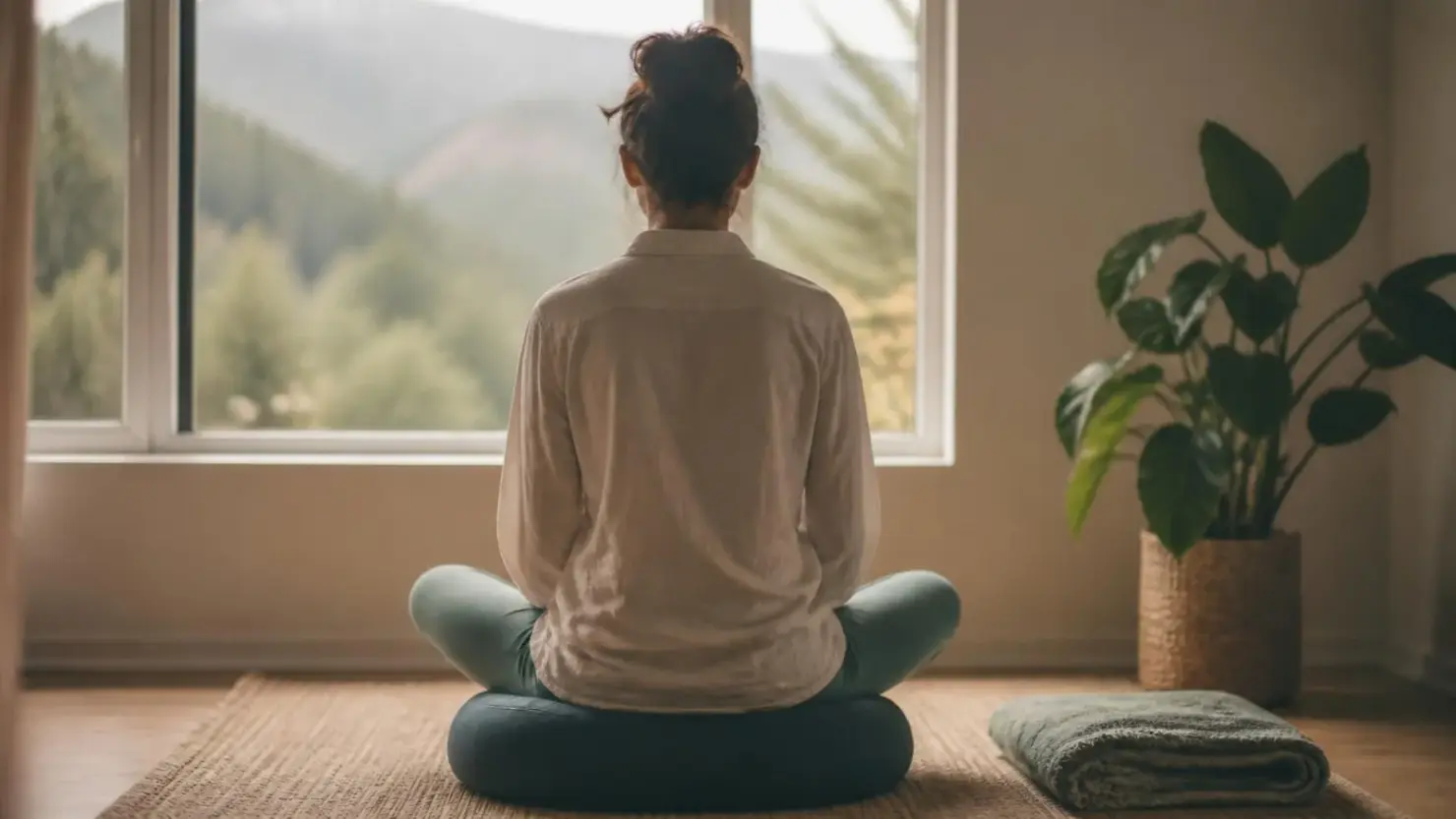
On a cushion: sit on the front third of a firm cushion so the hips are higher than the knees, legs crossed loosely in front. If your knees float above the floor, add a folded blanket under them. Pain in the knees or lower back within a few minutes means the seat is too low or too soft, not that you are unfit for meditation.
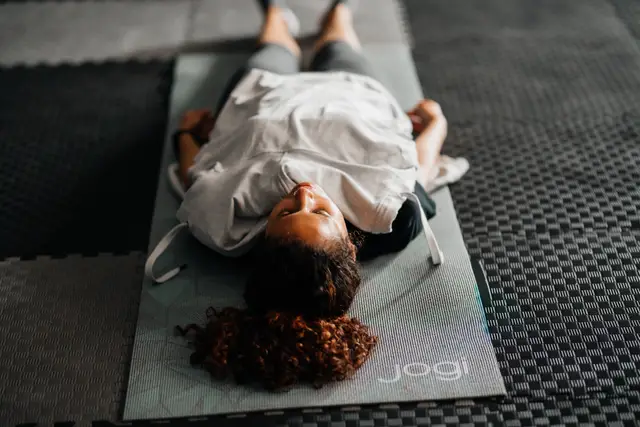
Lying down is fine for a body scan, and it is what we use in yoga nidra. For breath meditation it reliably becomes a nap. If you must lie down, bend the knees with feet flat on the floor; it keeps the body slightly engaged.
Then the breath. Do not deepen it or slow it; just feel it. Most people find it easiest at one of two places: the air moving at the nostrils, cool on the way in and warm on the way out, or the rise and fall of the belly. Choose one and stay with it for the whole sitting. In Vipassana this preliminary practice has a name, anapana, and the first day of every retreat is spent entirely on it, because everything else is built on that anchor.
Step-by-Step: Your First Meditation at Home
Seven steps, in order. Read them once, then put the phone down and do them.
- Sit in your spot, in one of the postures above. Take a moment to arrange the body so it needs no further attention.
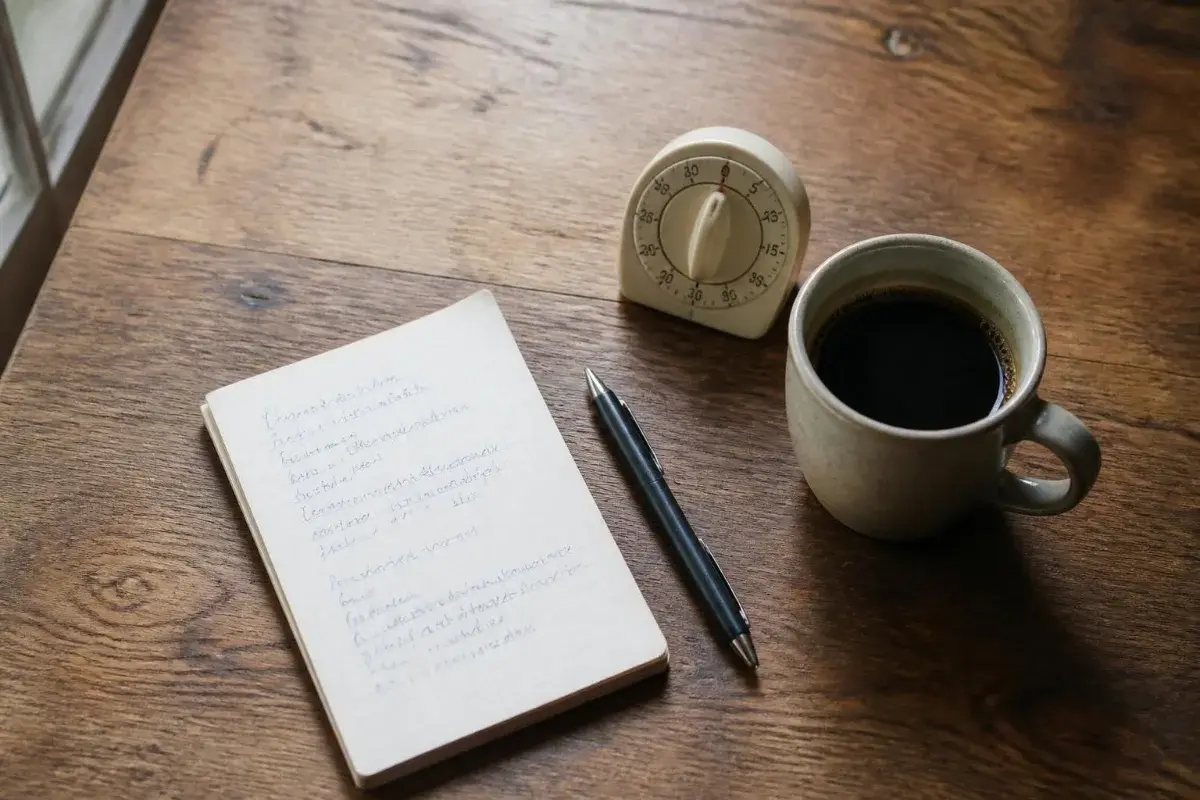
- Set a timer for five minutes (a phone in flight mode, face down, or a kitchen timer). Deciding the end in advance frees you from checking.
- Settle. Close your eyes. Take three slower breaths, letting the shoulders drop on each exhale. Then let the breath return to its own rhythm.
- Find the breath at the nostrils or the belly. Rest your attention there as you would rest your eyes on a candle: lightly, without staring.
- When you notice you have wandered, and you will, within seconds, silently label what took you: thinking, planning, remembering, sound. One word, neutral, like naming the weather. Then return to the breath. Do this fifty times if it takes fifty times. Each return is one repetition of the only skill that matters.
- When the timer sounds, do not leap up. Let the attention widen to the whole body, then to the room. Open the eyes. Take one deliberate breath before you stand.
- Write one line: date, minutes, one word for how it was ("restless", "sleepy", "okay"). It takes fifteen seconds, and in a month it will show you a pattern you cannot see from inside a single sitting.
That is it. There is no step where you achieve something. The entire practice is steps 4 and 5, repeated.
The Four Things That Stop Beginners
I have watched hundreds of people start, and most of the ones who quit hit one of these four walls in the first two weeks.
"Nothing is happening." Correct, and expected. The changes from meditation show up outside the sitting, not inside it: a pause before you snap at someone, a night you fall asleep faster, a worry you notice and put down. Give it a month of daily practice before you judge it. Judging it after three days is like judging a gym after three visits.
Falling asleep. The body has been trained to read "eyes closed, still" as bedtime. Sit more upright, open the eyes slightly and rest the gaze on the floor a metre ahead, or meditate earlier in the day. Sleepiness at 10 p.m. is not a meditation problem; it is a bedtime.
A flood of thoughts. This is the one that convinces beginners they are uniquely bad at meditation. They are not. The flood was always there; sitting still is the first time you have looked at it. Do not fight it. Label, return, label, return. On a bad day, counting breaths from one to ten and starting over gives the mind a slightly bigger job and it settles faster. If the flood follows you off the cushion, our guide on how to stop overthinking goes further.
"Am I doing it right?" If you are sitting, noticing when you have wandered, and coming back, you are doing it right. There is no better version you are missing. This question is itself just another thought; label it doubting and return to the breath.
How to Meditate Daily: Turning a Sitting into a Habit
A single good session changes nothing. Thirty ordinary ones change a lot. The research on habit formation, a 2010 study that followed people adopting a new daily behaviour, found it took a median of 66 days to become automatic, and that missing a single day made no difference to the outcome. That is the timescale to plan for: two months, not two weeks, with permission to miss a day.
Three things make the daily part hold.
Anchor it. "After I pour the coffee, I sit" is a plan. "I will meditate every day" is a wish. Pick an existing habit that already happens daily and place the sitting immediately after it. The existing habit becomes the reminder; you never have to remember.
Protect a minimum. Decide the smallest sitting that still counts, and make it absurdly small: three breaths, or two minutes. On the days when ten minutes is impossible, do the minimum. The habit survives on the days you show up small; it dies on the days you skip because you could not do it "properly".
Keep the log. The one-line journal from step 7 is the most underrated tool in this guide. A row of dates is motivating in a way that intentions are not, and a week of "sleepy" entries tells you to move the sitting earlier. You do not need an app to do this, though if you like a streak counter, Insight Timer is free and does not push you to buy anything.
Easy Mindfulness Tips for Beginners: Practice Off the Cushion
Formal sitting is the training; daily life is where it is used. Beginners who add small informal practices report that the formal sitting gets easier too, because attention is being exercised all day rather than for ten minutes.
Take one ordinary activity you do every day (brushing your teeth, the first three sips of tea, walking from the car to the door) and do it with full attention to the physical sensations, nothing else. When the mind leaves, bring it back, exactly as on the cushion. Use waiting (a red light, a kettle, a loading screen) as a cue to feel three breaths instead of reaching for the phone. And a few times a day, ask "where is my attention right now?" and simply notice the answer. None of these take extra time. All of them build the same muscle.

How to Practise Vipassana Meditation at Home
Everything above is the ground floor of Vipassana. Once the breath is steady enough that you can stay with it for a few minutes at a stretch, usually after a few weeks of daily sitting, the practice widens: instead of returning only to the breath, you begin to observe sensations throughout the body, moving attention slowly from the top of the head to the toes and back, noticing whatever is there (warmth, pressure, tingling, nothing) without preferring one sensation over another. Thoughts are labelled and released just as before. The object is no longer the breath but change itself: watching sensations arise and pass, and gradually losing the habit of grasping the pleasant ones and fleeing the unpleasant.
You can begin this at home with a ten-minute body scan at the end of your usual sitting. What you cannot easily do at home is go deep, because depth needs silence, hours, and someone to ask when it gets strange. That is what a retreat is for, and it is why I still go. If you want the technique explained from its roots, our article on what Vipassana meditation is covers the history and the method in full.
When to Learn With a Teacher
You can learn to meditate from this page. Most people who stick with it, though, had at some point a day, or three, in a room with a teacher and other people doing the same thing. It removes the "am I doing it right?" question for good, and it shows you, usually by the second day, a stillness that ten minutes at home only hints at.
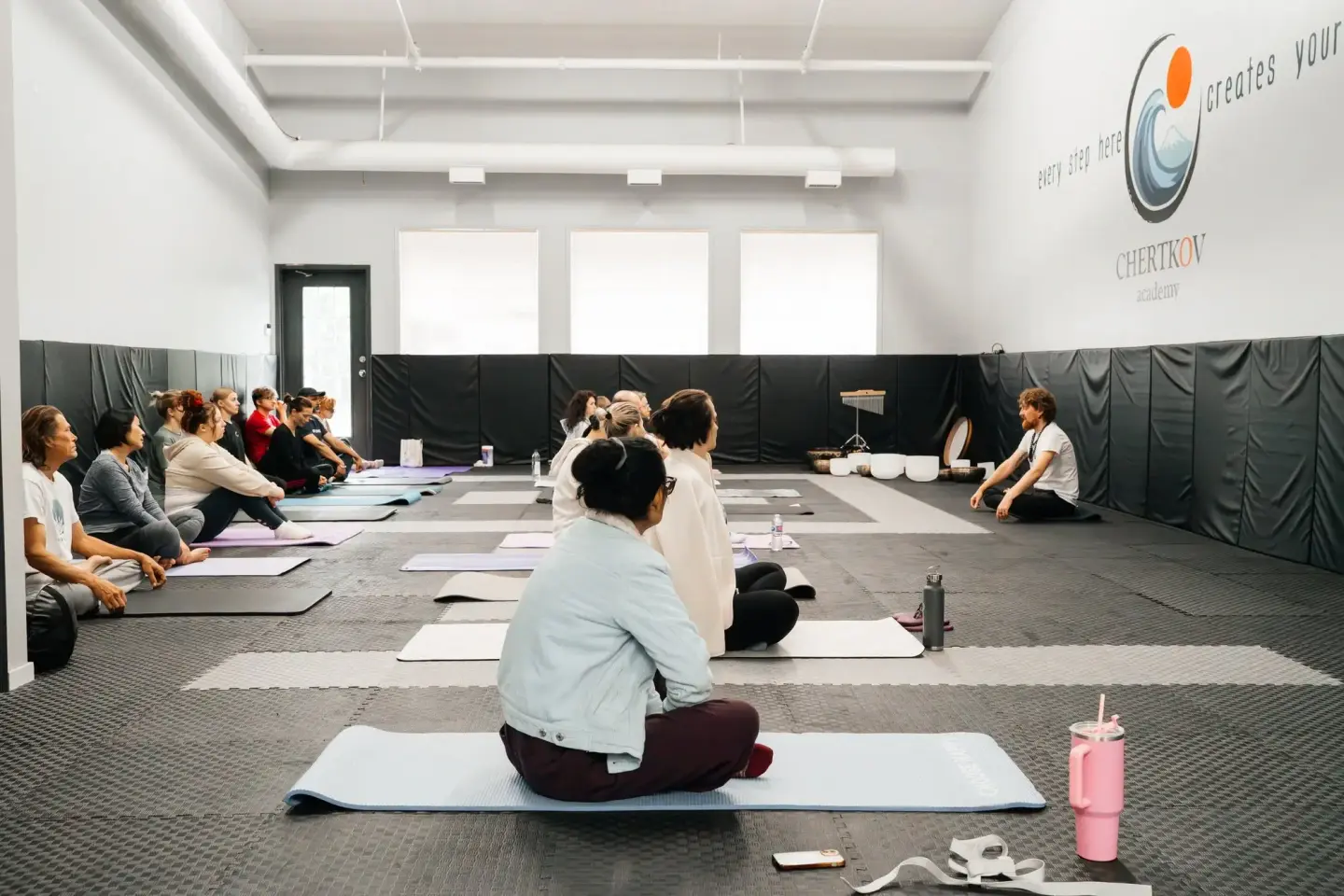
Our one-day retreat in Calgary and Edmonton is built for exactly this stage: a single day of guided sitting, walking meditation, and yoga, with no experience required. When you are ready for more, the three-day silent retreat at Mount St. Francis is where most of our participants first experience what the daily practice has been preparing them for.
Frequently Asked Questions
How do I meditate for the first time?
Sit upright on a chair or cushion, set a timer for five minutes, close your eyes, and feel the breath at the nostrils or the belly. When you notice your attention has wandered, silently label it ("thinking") and return to the breath. Repeat until the timer sounds. That is a complete first meditation.
How long should a beginner meditate?
Five minutes a day for the first week, then ten. Stay at ten to fifteen for a few months. The length of a sitting matters far less than doing it daily; five minutes every day builds the skill, and a long session once a week does not.
What is the best time of day to meditate?
The time you will actually keep. For most people that is the morning, immediately after an existing habit such as the first coffee, because the day has not yet interfered. Evening works if you are not too tired to stay awake sitting up.
Can I meditate lying down?
For a body scan or yoga nidra, yes. For breath meditation, lying down usually turns into sleep, because the body reads the position as bedtime. Sit if you can; if you must lie down, bend the knees with feet flat to keep the body slightly engaged.
Why can't I stop thinking during meditation?
Because nobody can. The mind wanders about half the time, and sitting still is simply the first time you have watched it do so. The aim is not to stop thoughts but to notice them sooner and return to the breath. Every return is the practice working, not failing.
How do I know if I'm meditating correctly?
If you are sitting, noticing when your attention has left the breath, and bringing it back without scolding yourself, you are doing it correctly. There is no hidden better version. The question "am I doing it right?" is itself a thought; label it and return.
How do I meditate daily without losing motivation?
Attach the sitting to a habit you already have ("after coffee, I sit"), set a minimum so small you can do it on your worst day (two minutes), and keep a one-line log. Plan for two months, not two weeks; missing an occasional day does not undo the habit.
Can I practise Vipassana at home?
Yes, at the beginner level: daily breath meditation, plus a slow scan of sensations through the body at the end of each sitting. Going deeper is much easier with the silence and guidance of a retreat, which is why even experienced practitioners return to them.

Valerii Bandurko
Co-founder & retreat coordinator · Vipassana.ca
Yoga entered Valerii’s life through back pain about eight years ago; of all the practices he explored since, Vipassana is the one that stayed. He never planned to teach, but after a one-day retreat with Artem in 2024 he became a certified yoga instructor (Yoga Alliance, International Yoga Federation), and now leads the one-day retreat in Calgary and, together with Artem, the 3-day silent retreats at Gull Lake and Mount St. Francis.
- Killingsworth MA, Gilbert DT. A Wandering Mind Is an Unhappy Mind. Science. 2010;330(6006):932. doi:10.1126/science.1192439
- Goyal M, Singh S, Sibinga EMS, et al. Meditation Programs for Psychological Stress and Well-being: A Systematic Review and Meta-analysis. JAMA Internal Medicine. 2014;174(3):357–368. doi:10.1001/jamainternmed.2013.13018
- Tang Y-Y, Hölzel BK, Posner MI. The neuroscience of mindfulness meditation. Nature Reviews Neuroscience. 2015;16:213–225. doi:10.1038/nrn3916
- Lally P, van Jaarsveld CHM, Potts HWW, Wardle J. How are habits formed: Modelling habit formation in the real world. European Journal of Social Psychology. 2010;40(6):998–1009. doi:10.1002/ejsp.674