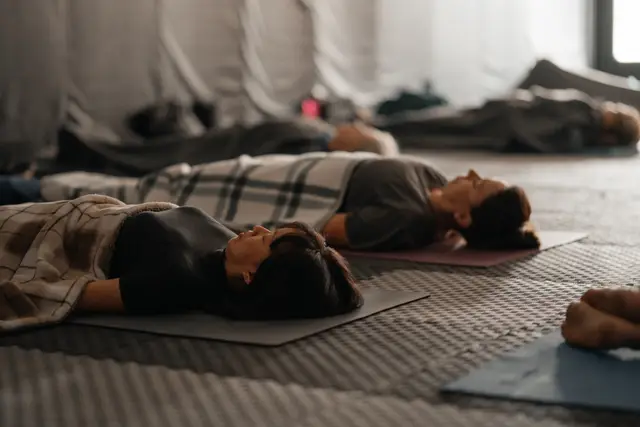

Sleep meditation is any meditation practice done in bed or just before bed to help you fall asleep, stay asleep, or return to sleep after waking. It works by interrupting the one thing that keeps most people awake: a racing mind. By moving attention from thoughts to the body and the breath, meditation lowers physiological arousal, and sleep research suggests it can meaningfully shorten the time it takes to fall asleep and improve sleep quality.
Here is what most articles on this topic miss: the best meditation for sleep requires no app, no headphones, and no screen. That matters, because the light and stimulation of a phone at midnight work directly against the state you are trying to reach. Every technique below can be done in the dark, in bed or beside it, with nothing but your own attention.
A word on where this comes from. I am not a sleep scientist. I came to yoga through back pain and to meditation gradually, and along the way I tried a lot of things, from holotropic breathwork to shamanic rituals, before Vipassana became the practice that stayed. The five techniques below are the ones that survived that sorting: simple enough to remember at midnight, and honest enough that I still use them myself.
Why Your Mind Races at Bedtime
During the day, tasks and stimulation keep the thinking mind occupied. At night the input stops, and the backlog gets processed. Psychologists call the pattern rumination: repetitive, self-referential thought that loops through worries, replays conversations, and rehearses tomorrow.
Rumination is not just annoying; it is physiologically arousing. Each worried thought triggers a small stress response, a touch of adrenaline, a bump in heart rate, that tells the body it is not safe to power down. You are lying still, but internally you are running.
This is why "just stop thinking" never works, and why meditation does. Meditation does not suppress thought; it gives attention somewhere else to rest, the breath, the body, so the arousal loop runs out of fuel. If a racing mind is a daytime problem too, our guide on how to stop overthinking goes deeper.
What the research says
The evidence for meditation for sleep is stronger than for most "natural" sleep aids. In a randomised controlled trial published in JAMA Internal Medicine in 2015, Black and colleagues assigned 49 older adults with moderate sleep disturbance to either six weeks of mindfulness meditation or six weeks of sleep-hygiene education. The meditation group improved significantly more on the Pittsburgh Sleep Quality Index, and also reported less insomnia, less fatigue, and fewer depressive symptoms. A 2019 meta-analysis of 18 randomised trials in the Annals of the New York Academy of Sciences (Rusch and colleagues) concluded that mindfulness meditation improves sleep quality, with effects that hold up against active controls. The mechanism is the one described above: less arousal, less rumination, an easier slide into sleep.
5 Sleep Meditation Techniques (No App Needed)
Try them in order, or jump to the one that fits how your sleeplessness feels tonight.
| Technique | Best for | Time |
|---|---|---|
| 1. Body scan | Physical tension, restlessness | 5–15 min |
| 2. Breath counting, long exhale | General difficulty switching off | 5–10 min |
| 3. Yoga nidra | Exhausted-but-wired nights; waking at 3 a.m. | 15–30 min |
| 4. Metta (loving-kindness) | Emotions, resentment, worry about people | 5–10 min |
| 5. Noting thoughts (Vipassana) | Chronic overthinkers | Open-ended |
1. Body Scan Meditation for Sleep
Best for: physical tension, restlessness

Lying in bed, move attention slowly through the body: toes, feet, calves, knees, and upward, spending a few breaths in each region. Do not try to relax anything; just feel what is there. Relaxation follows attention on its own.
The body scan works because it is incompatible with rumination: attention cannot be fully in your left calf and in tomorrow's meeting at the same time. Most people do not finish the scan before falling asleep. This is also the entry point of yoga nidra, the "rotation of consciousness", and if you enjoy this technique, a full yoga nidra practice is the deeper version.
2. Breath Counting with an Extended Exhale
Best for: general difficulty switching off
Breathe naturally and count each exhale: one, two, up to ten, then start over. Lose count? Start at one. Losing count is the practice noticing your mind wandered, which is a success, not a failure.
To deepen the effect, lengthen the exhale slightly: in for a count of four, out for a count of six or eight. A long exhale stimulates the vagus nerve and directly activates the parasympathetic "rest and digest" response. The popular 4-7-8 pattern (inhale 4, hold 7, exhale 8) is one version of this; if the breath-hold feels straining, skip it. The long exhale is what matters.
3. Yoga Nidra for Sleep (Non-Sleep Deep Rest)
Best for: exhausted-but-wired nights; waking at 3 a.m.
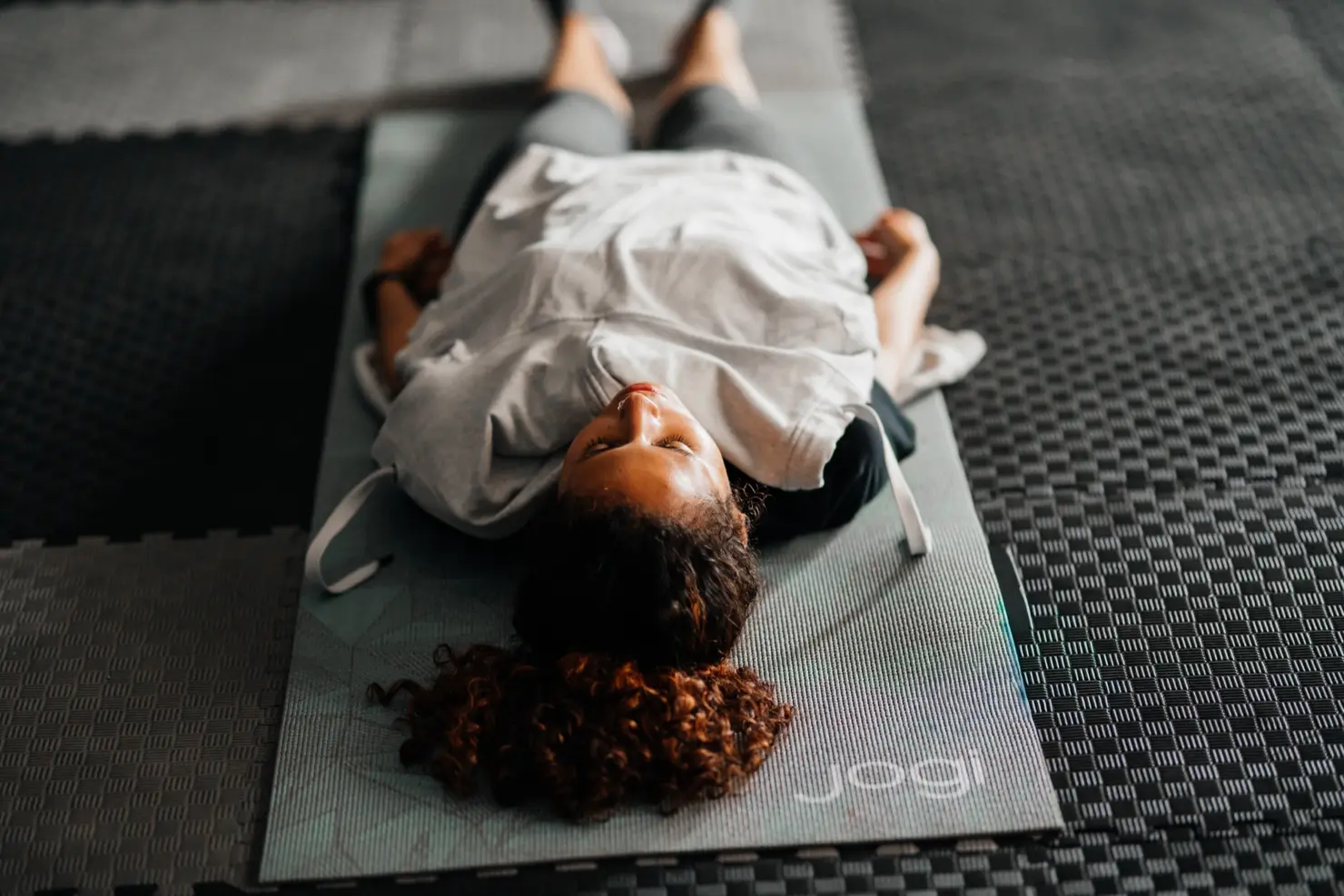
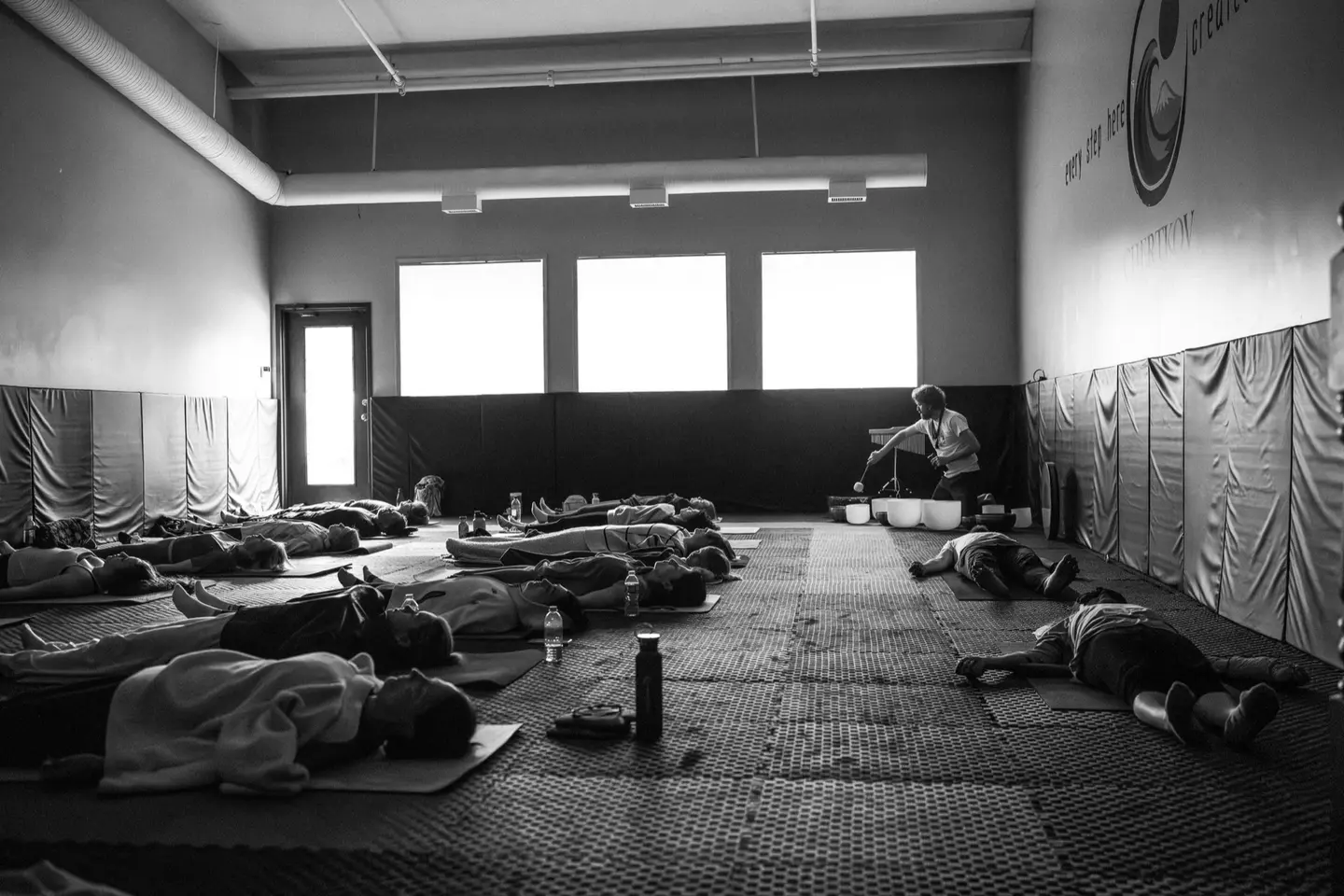
Yoga nidra is a structured, guided journey through body, breath, and imagery that parks you at the exact threshold between waking and sleep. If you wake in the night and cannot get back down, it is arguably the single best tool available: it either returns you to sleep or gives you deep rest while you are awake, which removes the panic of watching the clock.
You can be guided by memory rather than a recording: intention → body rotation → breath counting backward from 27 → heaviness and lightness → rest. Full instructions and a script are in our complete yoga nidra guide.
4. Metta (Loving-Kindness) Meditation
Best for: nights when emotions, resentment, or worry about people keep you up
Silently repeat a few phrases of goodwill, first for yourself, then for others: May I be at ease. May I be healthy. May I sleep peacefully. Then bring someone to mind, a loved one, a difficult colleague, and offer them the same phrases.
It sounds soft, but metta is a precision tool: it replaces the agitated emotional tone of rumination with a warm one, and emotional tone is what the body responds to. Research links loving-kindness practice with reduced self-criticism and improved positive affect, both friends of sleep.
5. Noting Thoughts: the Vipassana Approach
Best for: chronic overthinkers; minds that argue with every other technique
This is the technique that changed things for me, and the one we teach at our retreats. Instead of fighting thoughts, observe them arrive and label them softly: thinking… planning… remembering… worrying. Then let attention return to the breath or body.
The label does something subtle and powerful: it converts you from participant to observer. A thought you are inside of can spin for an hour; a thought you have noted as "planning" tends to dissolve in seconds. This is the same noting practice, from the Mahasi tradition, that we teach at our Vipassana retreats, applied horizontally, at midnight.
A 10-Minute Sleep Meditation Routine (No App, No Screen)
- Lights low, phone out of reach, ideally in another room. (2 min)
- Sit or lie down. Three slow breaths with extended exhales to signal the shift. (1 min)
- Brain-dump, if needed: if specific tasks are circling, write them on paper. Externalised thoughts stop demanding rehearsal. (2 min)
- Body scan from toes to head, unhurried. (4 min)
- Breath counting until sleep takes over. If thoughts intrude, note them, thinking, and return to the count. (open-ended)
Consistency matters more than technique. Done nightly, the routine itself becomes a conditioned cue for sleep: your body learns that this sequence means the day is over.
Back-to-Sleep Meditation: When You Wake at 3 a.m.
Waking in the night is normal; what turns it into a problem is the clock-watching and the arithmetic ("if I fall asleep now I'll get four hours"). Do not look at the time. Stay in the dark, lie on your back, and start yoga nidra from memory, or the plain body scan if that is what you know. Give yourself permission to rest without sleeping: the demand to sleep is exactly what keeps you awake. If after twenty minutes or so you are clearly wide awake and frustrated, get up, sit somewhere dim, do a few minutes of breath counting, and return to bed only when drowsy. This keeps the bed associated with sleep, which is also the core of CBT-I.

Sleep Meditation for Anxiety
When the obstacle is not a busy mind but an anxious one, two adjustments help.
First, ground in the body before the breath. Anxiety often makes breath-watching uncomfortable (the breath feels short, which triggers more anxiety). Start with sensations of contact instead: the weight of the body on the mattress, the blanket on the skin, five things you can physically feel. Then move to the breath once settled.
Second, drop the goal of sleeping. Paradoxically, pressure to fall asleep is arousing. Reframe the practice as rest: "I'm giving my body deep rest; sleep may or may not come." Removing the demand usually lets sleep arrive through the side door.
If anxiety at night is frequent and severe, meditation is a support, not a substitute for professional help. A doctor or therapist should be part of the picture.
Common Mistakes
- Trying to force sleep. Meditation invites sleep; it cannot command it. Effort is arousal. I still catch myself doing this on bad nights, and the fix is always the same: drop the goal, keep the practice.
- Using your phone for guided audio. Even with a dimmed screen, you have brought the world's most engaging device into bed. If you like guidance, learn one technique by heart instead. It works in the dark, forever, for free.
- Treating a wandering mind as failure. Noticing you drifted is the practice. Every return to the breath is a repetition, like a rep in the gym.
- Only meditating at bedtime. Ten minutes of daytime practice builds the skill that night-time practice depends on. Bedtime is the exam; daytime is the training. Our beginner's guide to starting meditation covers how to begin.
Does 20 Minutes of Meditation Replace 4 Hours of Sleep?
No. This claim circulates widely and no sleep research supports it. Deep meditative rest and sleep are different physiological states: sleep runs through an architecture of deep slow-wave stages and REM that the brain requires for memory consolidation, immune function, and physical repair, and no waking practice replicates it.
What meditation can do is improve the sleep you get: shorter time falling asleep, fewer ruminative awakenings, and calmer wakefulness when sleep is short. Meditation is a powerful complement to sleep and a poor substitute for it.
When Meditation Is Not Enough
Meditation addresses the mental side of sleeplessness. If the basics are working against you, fix them too: a consistent wake time, morning daylight, no caffeine after noon, a cool dark bedroom, and screens down an hour before bed.
And a necessary line: if you have had trouble sleeping most nights for more than three months, that pattern has a name, chronic insomnia, and effective treatment exists (CBT-I, cognitive behavioural therapy for insomnia). See your doctor. Meditation pairs well with treatment; it should not have to carry the whole load.
Sleep Is Usually the First Thing a Retreat Changes
Participants at our silent retreats most often name deeper sleep as the first change they notice, usually by the second night. It was true for me too: I began with three-day retreats before I ever attended a ten-day one, and the sleep was what I noticed first. Part of it is the schedule: no screens, early nights, a day of yoga and sitting. Part of it is the practice itself: by the evening, the nervous system has already been down-regulated for hours, and the sound bath that closes the day finishes the job. If you want to learn these techniques with a teacher in the room rather than from an article, the one-day retreat in Calgary and Edmonton is the shortest way in, and the three-day silent retreat at Mount St. Francis is where the sleep effect really shows.
Frequently Asked Questions
Which meditation is best for sleep?
The body scan is the most reliable starting point: it is simple, physical, and incompatible with rumination. For waking at night, yoga nidra is the strongest tool. Chronic overthinkers often do best with the noting technique, and anxious sleepers with grounding in body contact before the breath.
How do I calm my brain so I can sleep?
Give it a job that is not thinking. Write down anything that is circling, then move attention through the body from the toes up, or count exhales from one to ten. When a thought pulls you away, name it softly ("planning") and return. The mind calms when attention has somewhere else to rest, not when you order it to stop.
How do I do deep sleep meditation?
Lie in bed, take three slow breaths with long exhales, then move attention slowly through the body from toes to head. When thoughts pull you away, note them silently and return. Let sleep interrupt the practice whenever it wants.
How long should a sleep meditation be?
Five to ten minutes is enough for most nights; the routine above takes about ten. Yoga nidra for waking at 3 a.m. runs 15–30 minutes. Longer is not better: if you are still awake after twenty minutes of practice, the length is not the problem, the pressure to sleep is.
Is it OK to fall asleep while meditating?
At bedtime, that is the goal. In daytime practice, sleepiness is just a state to notice, though regularly falling asleep in daytime meditation usually means you need more sleep, not more meditation.
Should I meditate in bed or before bed?
Both work. If your mind is very active, sit beside the bed for the first minutes, then move to bed for the body scan. It keeps the bed associated purely with sleep.
What is the best free meditation app for sleep?
The one you do not open. Every technique in this guide is learned in a few nights and then works in the dark without a screen, which is exactly when a phone hurts most. If you want guidance while learning, listen during the day, then practise from memory at night.

Valerii Bandurko
Co-founder & retreat coordinator · Vipassana.ca
Yoga entered Valerii’s life through back pain about eight years ago; of all the practices he explored since, Vipassana is the one that stayed. He never planned to teach, but after a one-day retreat with Artem in 2024 he became a certified yoga instructor (Yoga Alliance, International Yoga Federation), and now leads the one-day retreat in Calgary and, together with Artem, the 3-day silent retreats at Gull Lake and Mount St. Francis.
- Black DS, O'Reilly GA, Olmstead R, Breen EC, Irwin MR. Mindfulness Meditation and Improvement in Sleep Quality and Daytime Impairment Among Older Adults With Sleep Disturbances: A Randomized Clinical Trial. JAMA Internal Medicine. 2015;175(4):494–501. doi:10.1001/jamainternmed.2014.8081
- Rusch HL, Rosario M, Levison LM, et al. The effect of mindfulness meditation on sleep quality: a systematic review and meta-analysis of randomized controlled trials. Annals of the New York Academy of Sciences. 2019;1445(1):5–16. doi:10.1111/nyas.13996